Sego Lily Bloom
A Thoughtful Embroidery Design for Small Business Branding
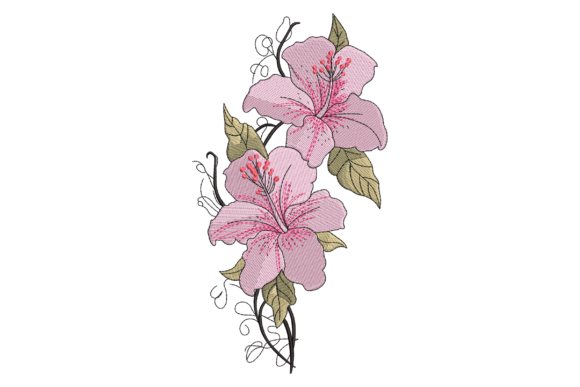
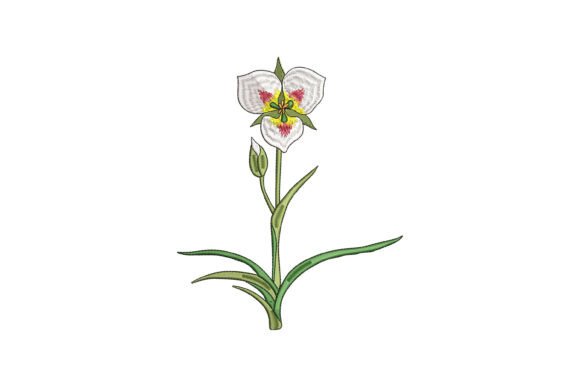
As an embroidery designer who’s developed hundreds of commercial designs for cafés, boutiques, florists, bakeries, and handmade brands, I approach every new file with two questions: “Does it tell a story?” and “Will it hold up in production?” When I first read the description — “Sego Lily Bloom Embroidery is a tribute to the quiet strength and refined beauty of the Sego Lily — a flower known for its elegance and resilience. Each hand-stitched bloom captures the soft curves…” — I knew this wasn’t just another floral motif. Sego Lily Bloom carries intention. It reads as elegant, grounded, and quietly confident — qualities that resonate deeply with small business owners building authentic, values-driven brands.
First Impression: Refined Simplicity Meets Quiet Strength
Sego Lily Bloom lands firmly in the elegant-modern category — not fussy, not overly botanical, and definitely not generic. Unlike busier single-flower designs in the Single Flowers Plants category, it avoids excessive petal layering or hyper-realistic shading. That restraint is strategic: it translates beautifully into clean, scalable embroidery. For a local florist’s apron or a boutique’s tote bag design, Sego Lily Bloom feels intentional and premium — like a signature rather than decoration. It’s friendly without being cutesy, classic without feeling dated, and handmade without sacrificing polish. That balance is rare — and exactly what small business merch needs to stand out on shelves, uniforms, and social feeds.
Real-World Performance Across Merchandise Types
In my studio, I test every machine embroidery design across five high-use applications before recommending it to clients. Here’s how Sego Lily Bloom performs:
- Embroidered patch: Excellent clarity at 2”–3” width. The open petal structure avoids stitch crowding, and the central stamen detail reads cleanly even with moderate stitch density.
- Cap embroidery: Works well on front panels when centered or subtly offset — especially on structured cotton twill or wool blends. Avoid placing it too low on curved bill fronts where distortion can blur delicate curves.
- Apron embroidery & staff uniforms: A natural fit for chest pockets or sleeve cuffs. Its vertical flow complements garment lines without competing with text or logos.
- Tote bag design: Holds presence on natural canvas or linen without overwhelming the fabric. Looks especially strong in tonal thread (e.g., oat on cream) for artisanal brands.
- Product packaging accents & customer gifts: Perfect for stitching onto kraft tags, linen pouches, or ceramic coaster sleeves — reinforcing a handmade product ethos without visual clutter.
Where to Use Sego Lily Bloom With Intention
Not every surface suits every design — and Sego Lily Bloom is no exception. Use caution when applying it to:
- Small patch sizes under 1.5”: The subtle curves and stamen detail may compress or lose definition. Always test at actual size.
- Highly textured fabrics (e.g., heavy burlap or looped terry): May obscure fine outlines; consider simplifying or adjusting underlay if digitizing in-house.
- Dark uniforms with light thread: Ensure contrast is sufficient for legibility — especially in low-light environments like café back-of-house or evening events.
- Frequently washed items (e.g., chef aprons, reusable totes): Confirm thread colorfastness and stabilizer choice — a medium-weight cutaway helps maintain shape over repeated laundering.
How Sego Lily Bloom Strengthens Brand Identity
For small businesses, consistency isn’t just about matching colors — it’s about emotional resonance. Sego Lily Bloom supports brand identity by offering visual continuity across touchpoints: a single motif that works equally well on a woven label, a cap, a gift tag, and a digital mockup. Customers subconsciously associate its quiet elegance with care, authenticity, and attention to detail — traits that build trust far more effectively than ornate graphics ever could. On Etsy listings or boutique windows, it signals craftsmanship without shouting. And because it’s rooted in a real native plant (the Utah state flower), it adds subtle regional or ecological storytelling — a quiet differentiator for eco-conscious or locally rooted brands.
Practical Designer Notes Before You Stitch
Before launching Sego Lily Bloom into production, run these checks — they’ve saved me (and my clients) from costly re-runs:
- Test in black and white first: Print a grayscale version to assess value contrast and silhouette clarity — especially important for cap embroidery or dark fabrics.
- Verify small-size legibility: Resize your digital embroidery file to 1.75” wide and check spacing between petals and stamen in your embroidery software.
- Review thread color pairings: Soft neutrals (heather gray, oat, sage) enhance its natural feel; deep navy or charcoal adds sophistication for professional apparel.
- Confirm hoop size and stabilizer match: This design benefits from stable hooping — use a medium-weight cutaway for knits or lightweight wovens, and tear-away for stable canvas or twill.
- Create a printable mockup: Show clients how Sego Lily Bloom looks on their actual tote bag or apron style — context changes perception.
- Compare alongside existing design assets: Does it harmonize with your logo, typography, and other icons? Consistency multiplies recognition.
- Confirm commercial licensing: If sourcing Sego Lily Bloom as a digital embroidery file, ensure your license covers resale, branded merchandise, and commercial embroidery — not just personal use.
Final Thought: More Than a Flower — A Brand Anchor
Sego Lily Bloom isn’t just another embroidery file. It’s a versatile, emotionally intelligent asset for small businesses building meaningful connections. Whether stitched on a barista’s apron, a florist’s reusable tote, or a pet brand’s collar tag, it communicates calm confidence and thoughtful craft. In a market flooded with loud, trend-driven graphics, choosing Sego Lily Bloom says something quiet but powerful: We value beauty that endures. We invest in quality that shows. We’re here for the long bloom. That’s not decoration — that’s brand strategy, stitched by hand.