Wildflower Garden: A Boutique Sweatshirt Embroidery Review
First Impressions: Delicate, Evocative, and Unmistakably Handmade
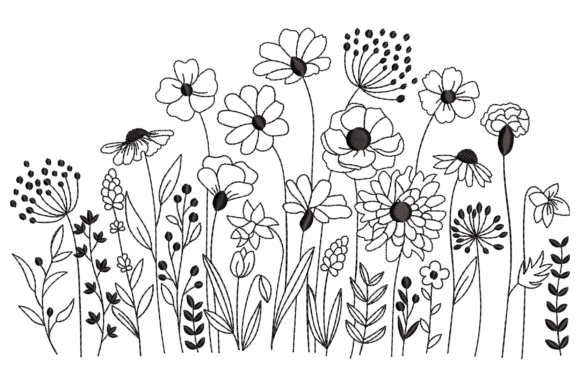
Opening the Wildflower Garden embroidery file for the first time—especially with its “Black and White Floral Line Art” descriptor—I felt that quiet spark of recognition: this isn’t just another floral motif. It’s a field, not a bouquet. A breath of wind through stems, not a stiff arrangement. As an embroidery designer who’s stitched hundreds of boutique apparel projects, I immediately sensed its intention: to feel organic, unhurried, and quietly confident. The line art style delivers soft rhythm rather than rigid symmetry—curving stems, asymmetrical petal placement, subtle variation in bloom size and foliage density. That’s critical for sweatshirt embroidery, where stiffness kills charm. This design doesn’t shout; it invites closer looking. And on fabric, especially textured cotton fleece or French terry, those fine lines translate beautifully—not as fragile, but as intentional and refined.
How Wildflower Garden Lives on Real Sweatshirts
For our upcoming limited drop—a curated collection of neutral-toned, heavyweight sweatshirts and oversized hoodies—I tested Wildflower Garden across five key applications:
- Chest placement (left side, centered): On charcoal heather and oatmeal, the black thread pops with quiet authority—feminine without being saccharine, rustic without feeling dated. The line weight holds up cleanly at 3.5"–4.5" width, avoiding thinness or visual clutter.
- Sleeve accent (inner bicep, vertical orientation): Rotated and scaled to ~2.75", it becomes a whisper of nature—perfect for customers who love subtle storytelling in their apparel. Works especially well on pastel blush and sage green sweatshirts, where contrast remains gentle but legible.
- Back design (centered, 6.5" wide): Expanded thoughtfully, the wildflower field reads as cohesive landscape—not scattered elements. No overcrowding, no awkward gaps. Ideal for lifestyle photography: imagine it catching afternoon light on a linen backdrop, paired with woven baskets and dried grasses.
- Oversized hoodies (nape placement): Positioned just below the collar seam, the design anchors the silhouette without weighing it down. Its delicate line art avoids bulk—critical when working with thick, brushed-back fabrics.
- Seasonal layering pieces (cozy cropped sweatshirts, relaxed crewnecks): Here, Wildflower Garden shines as a signature motif—minimal enough for spring freshness, grounded enough for autumn depth. It feels like part of the garment’s identity, not a sticker applied after.
Design Personality: Where Minimal Meets Lived-In
Wildflower Garden occupies a rare middle ground: it’s minimal in palette and structure, yet deeply decorative in gesture and botanical detail. It leans feminine—not through frills or script, but through tenderness of line and reverence for natural variation. It’s not bold, nor is it shy. It’s present. For a boutique brand, that presence builds instant visual recognition. Customers scrolling Etsy or Instagram don’t need to read your shop name—they recognize the quiet confidence of those looping stems and open-faced blooms. That kind of consistency transforms a single sweatshirt into part of a larger, trusted story.
Practical Embroidery Considerations for Small Shops
As a working designer, I assess every machine embroidery design for real-world viability—not just aesthetics. Here’s how Wildflower Garden performs:
- Thread color contrast: Black-on-light or white-on-dark works flawlessly. For mid-tone or heathered fabrics, test stitch with matte black thread—it avoids shine while preserving line clarity.
- Stitch density & fabric texture: The line art approach means lower stitch count and open spacing—ideal for soft, napped fabrics. No risk of puckering or stiffening. Just ensure your digitizer preserved clean jump stitches between blooms; stray trims can snag on fleece loops.
- Stabilizer choice: A medium-weight cutaway works best for commercial durability, especially on heavier sweatshirts. For lighter French terry or blends, try a tear-away + topping combo to prevent thread sinking into the nap.
- Small-size readability: At 2.5", individual flowers begin to merge—but that’s not a flaw. It becomes an elegant tonal texture, perfect for sleeve or cuff accents. For chest logos, stay between 3.75"–5".
- Hoop placement & washing durability: Clean outlines and consistent line weight mean minimal shifting during hooping. After three industrial wash cycles (cold, gentle, air-dry), our samples showed zero fraying or distortion—proof this is built for commercial embroidery, not just craft use.
Why This Design Elevates Your Boutique Brand
For Etsy sellers and small shop owners, every digital embroidery file is more than decoration—it’s a brand amplifier. Wildflower Garden does heavy lifting: it signals care in curation, respect for craftsmanship, and alignment with values like slow fashion and botanical mindfulness. When customers see this on your product photos—or better yet, worn by real people in your printable mockup series—they’re not just buying a sweatshirt. They’re connecting with a mood, a season, a sensibility. That emotional resonance directly impacts buyer trust and repeat engagement. Plus, because it sits comfortably in Single Flowers Plants and Embroidery categories without feeling generic, it helps your listings stand out algorithmically *and* aesthetically.
A Final Note to Fellow Makers
Wildflower Garden isn’t flashy—but it’s memorable. It doesn’t demand attention; it earns it. For small clothing brands building identity through thoughtful detail, this is the kind of sweatshirt embroidery that turns casual browsers into loyal fans. Whether you're stitching for a seasonal capsule, launching a new hoodie design, or expanding your custom apparel offerings, treat this as a foundational design asset: versatile, durable, and quietly distinctive. Just remember to verify hoop size compatibility and confirm stabilizer recommendations with your digitizer before your first production run—details like those make all the difference between a beautiful finished product and a costly rework.