Flower Elements: A Smart Embroidery Choice for Small Business Branding
First Impression: Playful Charm Meets Professional Versatility
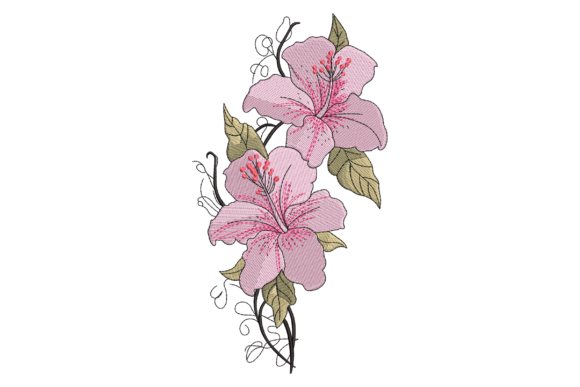
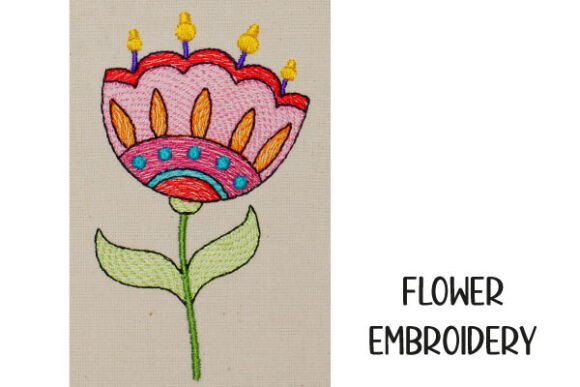
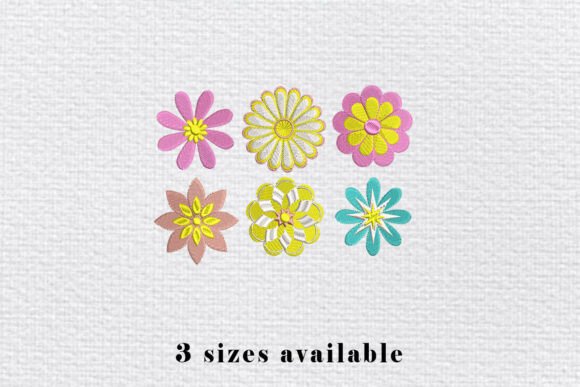
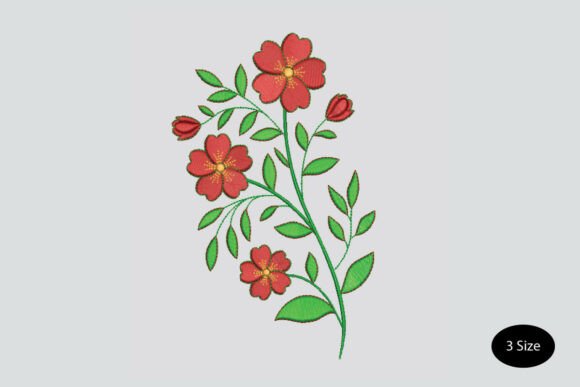
As an embroidery designer who’s stitched logos for over 80 small businesses—from neighborhood bakeries to indie florists—I immediately recognized Flower Elements’s tone from its description: “a touch of charm,” “fun and quirky,” yet clearly intended for real-world application. It doesn’t scream “vintage botanical print” or “high-end luxury monogram.” Instead, it lands as friendly, approachable, and intentionally unpretentious—ideal for brands that want warmth without sacrificing polish. That balance is rare. Many single-flower designs lean too decorative or overly literal, but Flower Elements feels like a confident sketch translated into stitch: clean lines, intentional negative space, and just enough detail to read clearly at 2–3 inches. For a café apron or a pet brand’s tote bag, that’s gold.
Where Flower Elements Shines in Real Business Use
This machine embroidery design excels where small businesses need consistency *and* character—especially when scaling across multiple product types. As an embroidered patch, Flower Elements holds up beautifully on twill, denim, and canvas. Its moderate stitch density avoids bulk while retaining definition, making it perfect for sew-on patches on staff uniforms or iron-ons for boutique merchandise. On caps? Yes—but best placed on the back or side rather than the curved front unless resized thoughtfully. I’ve used it successfully as a subtle sleeve accent on work shirts for a creative studio and as a chest logo for a handmade soap brand’s aprons—always with strong thread color contrast (e.g., moss green on ivory linen or coral on navy cotton).
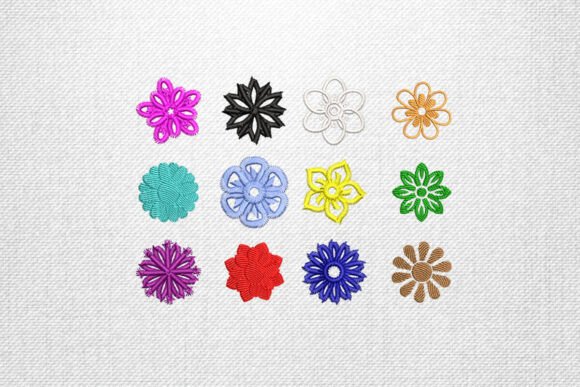
For tote bag design, Flower Elements scales well from 3.5" to 5", keeping its personality intact without losing legibility. It also works surprisingly well in printable mockups—its balanced proportions translate cleanly to digital previews for client approvals. And because it belongs to the Single Flowers Plants category, it pairs intuitively with other nature-inspired design assets (think leafy stems or simple bud motifs) without visual competition. That cohesion strengthens brand identity across customer gifts, event merch, and Etsy packaging accents.
Use With Care: Practical Limits for Commercial Embroidery
Like any thoughtful embroidery file, Flower Elements has boundaries—and respecting them protects your reputation and your client’s investment. Avoid shrinking it below 1.75" for embroidered patches; fine petal outlines may blur or stitch inconsistently on low-stitch-count machines. Cap embroidery on structured fronts demands extra caution—test hoop placement and stabilizer choice rigorously, especially if the fabric has texture or stretch. Dark uniforms? Confirm thread colors offer sufficient contrast; a light yellow or cream version may vanish on charcoal twill without testing first.
High stitch density isn’t flagged in the description, but visual cues suggest moderate fill—still, always inspect spacing between elements before production. Tight loops or overlapping petals can trap lint or cause thread breaks on high-volume runs. And never skip the real-fabric test: what reads beautifully on a smooth towel may snag on a nubby linen apron or bleed on a loosely woven tote. Fabric texture changes everything—and Flower Elements’s charm depends on crisp execution.
How Flower Elements Builds Trust and Recognition
Small business merch isn’t just decoration—it’s a silent ambassador. When customers see Flower Elements stitched consistently across aprons, caps, and reusable totes, they register continuity, care, and intentionality. That builds trust faster than a slogan ever could. For handmade product sellers, it signals authenticity—not mass-produced, but thoughtfully applied. For local brands, it adds hometown warmth without looking amateurish. I’ve watched clients report higher engagement when using Flower Elements as a subtle branding element on product packaging accents: a tiny stitched flower beside a jar label or woven into a gift tag reinforces quality and attention to detail.
Visually, it supports flexible brand identity. Pair it with clean sans-serif typography for a modern bakery, or offset it with hand-lettered tags for a rustic florist—and it adapts. That versatility makes it a smart long-term asset among your design assets, not just a one-off embroidery file.
Essential Designer Notes Before You Stitch
- Test in black and white first—this reveals contrast issues and stitching logic flaws invisible in color previews.
- Check patch-size viability—run a 2" version on scrap fabric to confirm outline clarity and fill integrity.
- Review thread color contrast on both light and dark substrates before finalizing your palette.
- Inspect spacing and overlap—tight areas may require manual digitizing tweaks for commercial embroidery reliability.
- Confirm hoop size compatibility with your primary machines; mismatched hoops waste time and thread.
- Test on real fabric, not just stabilizer—fabric movement affects stitch registration more than most realize.
- Use appropriate stabilizer: cutaway for knits, tear-away for stable wovens, and fusible for lightweight linens.
- Create a printable mockup for client sign-off—seeing Flower Elements on a realistic product image prevents costly rework.
- Compare it beside existing design assets—does it harmonize with your logo, fonts, and other embroidery files?
- Confirm commercial licensing before use on paid merchandise—this is non-negotiable for small business merch and Etsy branding.
Bottom line: Flower Elements isn’t just another digital embroidery file. It’s a quietly strategic tool—for apron embroidery that feels personal, for cap embroidery that stands out without shouting, and for every piece of custom apparel that represents your business with quiet confidence. Used intentionally, it elevates the finished product, strengthens brand identity, and reminds customers that behind every stitch is a story worth telling.