Minimalist Wildflower – Modern Floral
A Designer’s First Look: Delicate, Not Dainty
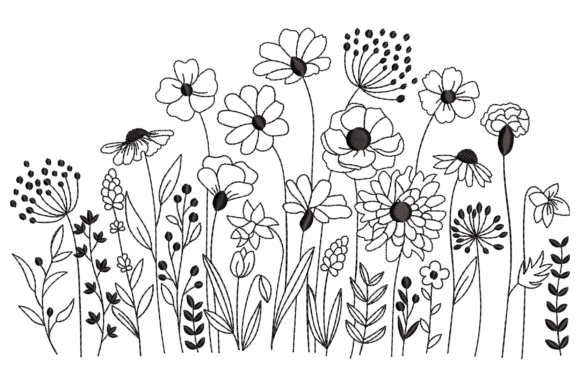
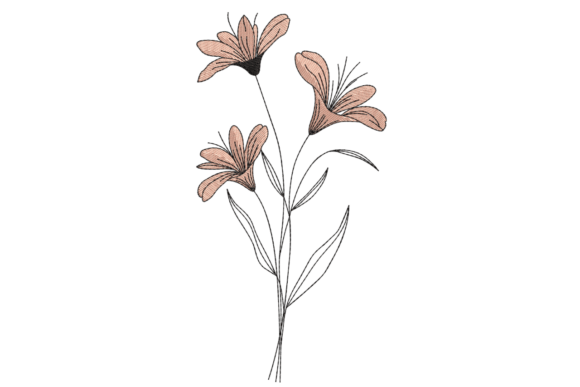
When I opened Minimalist Wildflower – Modern Floral, I didn’t see “cute” or “trendy”—I saw intention. Three slender blooms in soft, dusty peach. No filler leaves, no heavy stems, no ornate borders. Just quiet confidence in line and negative space. It reads as botanical, not floral—more field sketch than bouquet. That distinction matters: this isn’t a design for maximalist baby onesies or busy tote bags. It’s for the customer who chooses linen over polyester, who folds her tea towel with care, who buys handmade because she trusts the hand behind it.
Where It Lives Best (and Why)
I tested Minimalist Wildflower – Modern Floral on a heavyweight organic cotton tote—no lining, no interfacing—and stitched it low on the front pocket. The result? Calm. Refined. Instantly elevated. It didn’t shout; it settled in. That’s its strength: it enhances without dominating. As a sweatshirt embroidery, it works beautifully on the left chest—small enough to avoid bulk, detailed enough to hold attention at arm’s length. On a baby blanket corner or a nursery pillow cover, it whispers tenderness without saccharine sweetness. For Etsy sellers offering personalized gifts, this is a quiet-value piece: customers pay more for restraint that feels intentional, not sparse.
It also translates cleanly into digital use. I dropped it into a printable mockup for a boutique apron listing—no color correction needed. The dusty peach thread reads true on screen, and the slender proportions scale well across product thumbnails. As an embroidery file, it’s lean: no excessive satin stitch runs, no dense fill areas that risk puckering on lightweight fabrics. That makes it reliable for small shop owners running tight production windows.
Where It Needs Thoughtful Handling
This isn’t a “stitch-and-go” design for every surface. On highly textured fabrics—like bouclé knit or thick terry cloth—the slender stems can blur or lose definition. On stretchy fabric like ribbed jersey, even light stabilizer won’t fully prevent subtle distortion in the outer petals unless you add light tear-away *under* the hoop *and* a soft cut-away *beneath* the garment layer. I learned that testing Minimalist Wildflower – Modern Floral on a scrap of heather-gray French terry first saved me from re-hooping twice.
Dark fabric demands extra attention. Dusty peach thread fades visually on charcoal or navy unless you increase underlay or add a white bobbin thread pass underneath. And on curved surfaces—caps, beanies, or curved pillow edges—the topmost bloom tends to compress slightly. Not a flaw, but a reality: test hoop placement with a water-soluble marker before stitching. Also, avoid pairing it with tiny lettering or monograms nearby—the design’s breathing room is part of its voice. Crowding it undermines its minimalism.
Stitch Density & Fabric Pairings
- Lightweight cotton or linen: Use medium-weight tear-away stabilizer. The design’s open structure prevents tunneling—but skip heavy cut-away unless the fabric frays aggressively.
- Medium-weight knits: Combine light cut-away + topping (like Sulky Solvy) to keep stems crisp and prevent skipped stitches on the curve of each petal.
- Dark or dense fabrics: Check stitch density in your software. If fill areas feel too sparse, add one pass of light satin stitch along petal edges—not to thicken, but to anchor contrast.
What It Does for Your Craft Business
Minimalist Wildflower – Modern Floral doesn’t just decorate—it positions. When used on a set of embroidered kitchen towels sold through a local boutique, it signals craftsmanship over craftiness. Customers notice the spacing between blooms, the consistent thread tension in the running-stitch stem lines, the way the peach avoids looking washed-out next to natural dyes. That perception builds trust: if this detail is handled well, what else is?
For Etsy sellers, it’s a strong anchor design. List it alongside neutral-toned apparel, linen napkins, or ceramic mugs—and watch conversion lift. Why? Because it’s cohesive, not generic. It supports brand consistency without demanding full pattern matching. And unlike busier floral embroidery files, it scales cleanly into digital previews: no pixelation in mockups, no awkward cropping on mobile thumbnails.
As a commercial embroidery file, it performs reliably across machine types—but always confirm licensing before bundling it into a digital embroidery bundle or selling finished items. Some versions allow small-batch commercial use; others restrict resale. When in doubt, treat it like a trusted collaborator: credit where due, test thoroughly, and never assume compatibility.
Practical Notes Every Designer Should Run Through
- Test Minimalist Wildflower – Modern Floral on scrap fabric *in your actual project fabric*, not just muslin.
- Check thread color contrast on both light and dark backgrounds—dusty peach shifts dramatically depending on base tone.
- Review stitch density: look for thin areas where fill might pull or gap, especially near petal tips.
- Confirm hoop size fits your intended placement—especially for baby embroidery or cap fronts.
- Inspect small details at 200% zoom: are stem ends clean? Do petal outlines read clearly at 1.5” width?
- Try a black-and-white mockup: does the shape still carry weight without color?
- Use proper stabilizer—not just “some,” but the right *type* for your fabric + design density combo.
- Verify whether your license covers personal projects, small shop merchandise, or digital resale.
The Last Stitch
Minimalist Wildflower – Modern Floral won’t win a contest for flashiest Single Flowers Plants embroidery file. But it will earn repeat orders from customers who value clarity over clutter, subtlety over saturation. It’s the kind of embroidery design that makes a handmade product feel considered—not just made. Whether you’re stitching a holiday gift for a friend, prepping a batch of tote bag designs for craft fair season, or building a cohesive line of nursery decor, this piece earns its place by doing less, so your work says more.