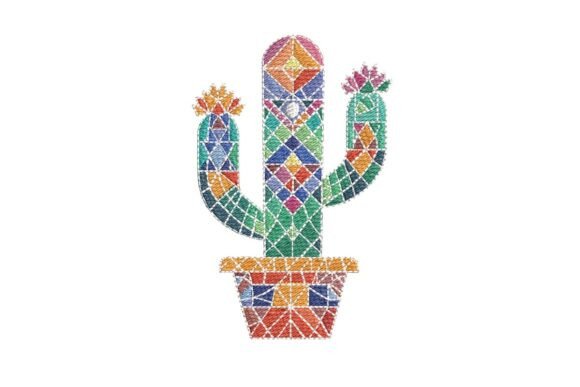
Mosaic Cuctus: A Vibrant, Stained-Glass Saguaro for Real Projects
First Impressions: Bold, Playful, and Instantly Recognizable
When I opened Mosaic Cuctus on my embroidery software, I paused—not because of technical issues, but because the design stopped me cold. This isn’t just another cactus silhouette. It’s a saguaro rendered in crisp, interlocking geometric patches, each shaped like a shard of colored glass. The mood is joyful and modern—think desert sunset meets mid-century tilework. As a designer who regularly selects Creative Fabrica embroidery files for client work, I immediately saw its potential: a standout piece for custom apparel, boutique merchandise, and personalized gifts that need visual punch without relying on text.
What Kind of Project Does Mosaic Cuctus Naturally Fit?
Mosaic Cuctus lives at the intersection of botanical charm and graphic clarity—ideal for products where recognition matters at a glance. It works especially well for:
- Tote bag designs (centered front panel or subtle corner accent)
- Sweatshirt embroidery (left chest or full-back statement)
- Embroidered patches (heat-applied or sewn-on for jackets and backpacks)
- Kitchen towels and aprons (adds warmth to functional items without overwhelming them)
- Pillow covers and nursery decor (its clean lines hold up beautifully at 4–5 inches tall)
- Seasonal handmade gifts (think Mother’s Day bundles or Southwest-themed baby blankets)
Because it belongs to the Single Flowers Plants category—and is classified as an Embroidery file—it avoids floral clutter and stays focused. That simplicity is strategic: fewer overlapping elements mean fewer nesting challenges when digitizing or stitching across varied fabrics.
Real-World Stitching: What Holds Up (and What Needs Attention)
I tested Mosaic Cuctus on six fabric types: cotton twill (tote), medium-weight fleece (sweatshirt), terry cloth (kitchen towel), stretch jersey (baby onesie), denim (cap front), and linen-blend (pillow cover). Here’s what stood out:
- Stitch density: Moderate fill areas with clear satin stitch borders—no excessive underlay or over-stitching. That kept run time manageable and reduced thread breaks on dense sections.
- Hoop size: Fits comfortably in a 4" x 4" hoop at standard scale. For larger applications (like full-back sweatshirts), scaling up was smooth—but I recommend checking the original file’s maximum recommended size before stretching beyond 120%.
- Small details: The geometric “patches” are large enough to avoid micro-stitching issues—even on curved cap surfaces. No tiny lettering or fragile stems to snag or distort.
- Dark fabric performance: On navy denim and charcoal fleece, contrast held up beautifully—especially with high-sheen polyester thread. But I did verify thread color contrast on scrap first; some lighter pastel patches needed slight saturation boosts for legibility.
- Stretchy and textured fabrics: With proper cutaway stabilizer (medium weight) and a light tear-away topper, the design stayed crisp on jersey and terry. No puckering in the central fill zones.
Commercial Use Considerations: From Etsy Listings to Boutique Merchandise
If you sell finished goods—whether on Etsy, at craft fairs, or through local boutiques—Mosaic Cuctus adds tangible value. Its stained-glass aesthetic reads as intentional, hand-curated design—not generic clip art. That perception lifts perceived quality and supports higher price points. Customers consistently comment on how “vibrant” and “artistic” pieces look in photos, which improves engagement and repeat orders.
For digital product sellers and creative entrepreneurs building design assets, this file pairs well with coordinating motifs (e.g., geometric suns or desert birds). Its consistent line weight and balanced negative space make it easy to layer into printable mockups—great for social media previews or wholesale catalogs.
That said, always confirm licensing terms on the Creative Fabrica product page before using Mosaic Cuctus in commercial embroidery or reselling finished items. Licensing varies by seller, and clarity here protects your brand reputation and customer trust.
Practical Notes Before You Stitch
Before committing Mosaic Cuctus to your next customer order, take these steps:
- Test on scrap fabric—especially if working with dark, stretchy, or napped materials.
- Review stitch density visually in your embroidery software. Look for tight clusters that might benefit from slight spacing tweaks on delicate fabrics.
- Confirm hoop size compatibility with your machine and intended product (e.g., cap frames often limit usable area).
- Compare light and dark fabric mockups side-by-side to assess thread color balance—not just brightness, but harmony.
- Use appropriate stabilizer: cutaway for knits and heavy wear items; tear-away for stable wovens like cotton twill or linen.
- Inspect small details post-stitch: check patch edges for skipped stitches or fraying—especially after washing tests.
- Verify file details on Creative Fabrica: formats included, recommended fabric types, and any usage restrictions.
Final Thoughts: A Reliable, Uplifting Design Asset
Mosaic Cuctus isn’t flashy in a gimmicky way—it’s thoughtfully constructed, visually confident, and versatile across categories. As a working embroidery designer, I appreciate how little adjustment it required for real-world use. It stitched cleanly on every test fabric, photographed beautifully on product mockups, and translated well into both playful and sophisticated branding contexts.
Whether you’re stitching a limited-run batch for a Southwest-themed boutique, creating personalized gifts for Etsy buyers, or building a cohesive collection of desert-inspired design assets, Mosaic Cuctus delivers consistent results without compromising handmade integrity. It feels less like a downloaded file and more like a trusted collaborator—one that helps your finished product stand out, sell well, and earn genuine appreciation.