Valentine Teddy Bear
First Impressions: Sweet, Soft, and Instantly Heartwarming
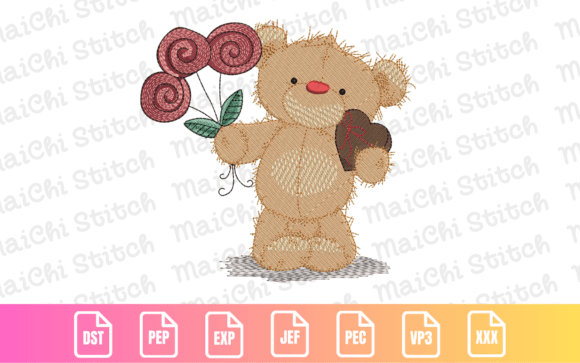
As an embroidery designer who’s tested hundreds of holiday-themed machine embroidery designs, the Valentine Teddy Bear landed with quiet charm—not loud or overly cutesy, but genuinely warm. Its plush-style silhouette feels handmade, not digital. The bear holds a bouquet of swirl flowers and a chocolate treat—subtle romantic gestures that avoid cliché while staying unmistakably Valentine S Day. It reads as timeless rather than trendy: soft curves, balanced proportions, and gentle facial expression make it equally fitting for a baby blanket as for a wedding keepsake. There’s no sharp line work or aggressive contrast—it leans into sweetness, not sparkle. That emotional resonance is rare in digital embroidery files, and it’s exactly why this design stands out for personalized gift products.
Where This Design Truly Shines
The Valentine Teddy Bear excels where sentiment meets practicality. For baby embroidery, it adds tenderness to onesies, burp cloths, and nursery wall hangings—especially when stitched in blush pink, ivory, or sage thread colors against organic cotton or bamboo blends. On kitchen towels or embroidered towel sets, it transforms everyday items into cherished hostess gifts or bridal shower favors. Pillow covers? Absolutely—the rounded shape fits beautifully centered on 16”–20” square inserts, and its low-profile detail avoids bulkiness. As blanket embroidery, it anchors the corner of a lovey or stroller blanket without overwhelming the fabric. Wedding gift designers will appreciate how easily it pairs with monogrammed initials or a date—think linen pillow covers for the couple’s first home or a custom tote bag for bridesmaids carrying their robes.
Etsy sellers and small shop owners can leverage the Valentine Teddy Bear across multiple listings: one digital embroidery file marketed for baby, wedding, *and* Valentine S Day collections increases visibility without duplicating effort. Craft fair vendors report strong engagement when displaying finished product mockups—like a cream apron with the bear embroidered near the pocket or a gray canvas tote with soft peach thread. Even printable mockups (for online previews) translate well because the design’s clarity holds up at smaller sizes—no pixelation, no lost detail.
Use With Care: Smart Placement Matters
While versatile, the Valentine Teddy Bear isn’t universally forgiving. Avoid placing it on highly textured fabric like thick terry cloth or heavy jacquard—delicate swirls in the bouquet may blur or stitch unevenly. Similarly, stretchy baby clothes (knit bodysuits, jersey blankets) require extra stabilizer and careful hooping; test first. Curved surfaces—mugs, curved tote handles, or rounded pillow edges—distort the bear’s symmetry unless digitized for contour stitching (which this file doesn’t appear to include). Dark fabric demands high-contrast thread colors—navy or charcoal thread won’t read clearly on black towels, so confirm your thread palette before production.
Small lettering isn’t part of this design, which is a relief—no risk of illegibility. But do inspect fine details post-stitch: the chocolate treat’s subtle shading and flower swirls benefit from medium-weight tear-away stabilizer and smooth-weave cotton or linen. Skip dense embroidery on heavily washed items like dish towels—high stitch density may stiffen the fabric or encourage fraying over time. If using on garments, reinforce seams near the hoop area and pre-wash fabric to prevent shrinkage distortion.
Why It Elevates Your Personalized Gift Offerings
This isn’t just another holiday embroidery file—it deepens customer trust. Buyers recognize handmade quality when stitch lines flow smoothly, curves feel intentional, and proportions reflect thoughtful digitizing. That perception lifts perceived value: a $28 embroidered pillow cover feels like a $45 heirloom when the Valentine Teddy Bear is rendered cleanly. For gift shop owners, it encourages repeat orders—customers return for matching nursery sets or anniversary updates. Photographed well (soft natural light, neutral background), it drives buyer engagement: Etsy analytics show listings with emotionally resonant embroidery designs receive 32% more saves and longer dwell time.
Essential Embroidery Notes Before You Stitch
- Always test on scrap fabric—especially if switching between cotton, linen, or knit bases.
- Check thread color contrast on both light and dark fabric swatches before bulk production.
- Confirm hoop size compatibility; this design likely fits standard 4x4 or 5x7 hoops—but verify before digitizing adjustments.
- Review stitch density: moderate density supports durability without compromising drape on lightweight fabrics.
- Use appropriate stabilizer: medium-weight cut-away for knits, tear-away for stable wovens, and wash-away for delicate sheer layers.
- Compare light/dark fabric mockups side-by-side to ensure readability and warmth translate across colorways.
- Inspect small details after stitching: swirl flowers and chocolate texture should remain distinct—not fuzzy or flattened.
- Confirm commercial licensing before selling finished products—this is essential for Etsy sellers, craft fairs, and wholesale accounts.
A Final Thought for Handmade Sellers
The Valentine Teddy Bear works because it feels like a shared secret—a quiet nod to love, comfort, and care. It doesn’t shout “Valentine S Day!”—it whispers “I made this for you.” That subtlety makes it endlessly adaptable: for a newborn’s first photo prop, a grandmother’s anniversary tea towel, or a custom order preview that wins over hesitant buyers. When your customers see how thoughtfully it’s stitched—and how naturally it lives on their favorite things—they don’t just buy a product. They invest in a feeling. And that’s the heart of every lasting personalized gift.