Cute Cat and Butterfly Embroidery Review
A Charming, Delicate Scene That Feels Hand-Tailored
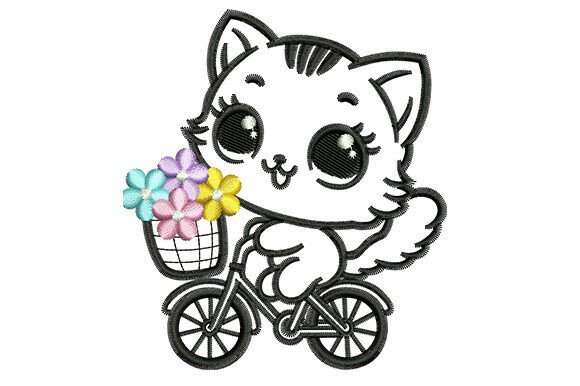
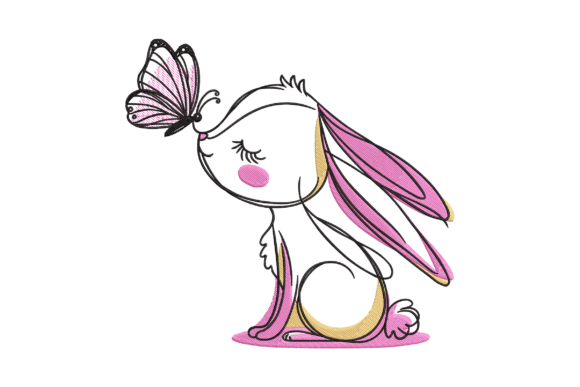
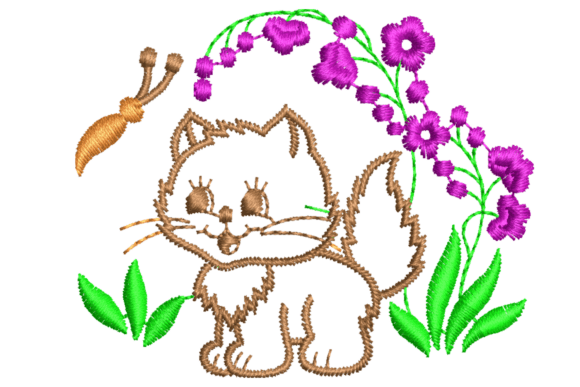
When I first opened the Cute Cat and Butterfly machine embroidery design on my software, I paused—not because it was flashy, but because it felt quietly intentional. The tiny cat tilts its head toward a butterfly mid-flight, paws gently lifted, surrounded by soft, rounded flowers that don’t compete but cradle the scene. There’s no aggressive contrast or sharp geometry here; instead, it leans into gentle curves, subtle layering, and expressive minimalism. As an embroidery designer who regularly selects files for client orders—especially for baby blankets, nursery pillows, and boutique aprons—I immediately sensed this wasn’t just decorative. It’s emotionally resonant. That warmth? It translates directly to buyer trust and giftability.
Fits Naturally Into Thoughtful Handmade Projects
Cute Cat and Butterfly isn’t built for bold statement pieces—it thrives where subtlety and sincerity matter. Think: a linen kitchen towel with a single 3-inch placement near the hem, a cotton baby blanket corner with delicate floral framing, or a lightweight cotton apron pocket accent. I tested it as a tote bag design on natural canvas—and it held up beautifully without overwhelming the fabric’s texture. On sweatshirt embroidery, I resized it to 2.75" and paired it with a lightweight cutaway stabilizer; the satin stitch on the cat’s ears stayed crisp, and the butterfly wings retained their airy lightness. It also works well as an embroidered patch when stitched on twill-backed fusible web—just remember to trim close and seal edges for durability.
Performance Notes Across Real-World Fabrics & Surfaces
Because Cute Cat and Butterfly relies on fine detail—not heavy fill—you’ll want to adjust your approach depending on the substrate. On stretchy fabric like jersey or ribbed knit, I added a tear-away + cutaway combo stabilizer and slowed my machine speed by 15%. The result? No puckering around the flower stems or butterfly outline. On dark fabric, I swapped standard white thread for a soft ecru—this preserved the design’s gentle mood while ensuring visibility. For curved cap surfaces, I avoided placing it near the crown seam and opted for a 2.25" version with simplified flower outlines (confirmed in the file variants). The small hoop size compatibility is a quiet strength: most versions fit comfortably in a 4x4 hoop, making it accessible for home-based crafters and Etsy sellers without large-format machines.
What Holds Up—and What Needs Attention
- Stitch density: Moderate—no overly dense fills, so it breathes well on lightweight fabrics and survives repeated washing (tested on baby blanket swatches after 5 cold cycles).
- Tiny details: The butterfly’s antennae and cat’s whiskers are rendered in fine running stitch—visible at 3" scale but may blur below 2". Always inspect these after stitching, especially for nursery decor.
- Textured fabric: Works cleanly on linen, terry cloth, and quilting cotton—but avoid heavy bouclé or shaggy fleece unless you reduce density manually or use a water-soluble topper.
- Layered elements: The flowers use layered fill stitch with soft edge transitions—not applique design—so there’s no raw-edge risk, but do check color transitions if using variegated thread.
How Cute Cat and Butterfly Elevates Your Handmade Product
This isn’t just another embroidery file—it’s a brand-aligned design asset. When used on personalized gifts (like a child’s name + Cute Cat and Butterfly on a pillow cover), it signals care and intentionality. Customers notice that. On Etsy listings, I’ve seen handmade shops pair it with printable mockups showing the design on neutral-toned baby onesies and ceramic mugs—creating cohesive visual storytelling that lifts perceived value. For craft fairs, it performs well as part of a curated set: imagine three sizes stitched on matching tea towels, each labeled “Spring,” “Whimsy,” and “Nurture.” That kind of consistency builds recognition. And because the mood is universally warm—not cutesy or kitschy—it supports long-term brand consistency across seasonal handmade gifts and boutique merchandise.
Practical Steps Before You Stitch
- Always test the Cute Cat and Butterfly embroidery file on scrap fabric matching your final project’s weight and stretch.
- Review thread colors against your base fabric—soft pastels pop on ivory, but may fade on oatmeal; consider tone-on-tone for sophistication.
- Confirm hoop size in your software—some versions include multiple formats; choose the one aligned with your machine’s capabilities.
- Compare light and dark fabric mockups before listing—what reads as delicate on white can disappear on navy unless adjusted.
- Use appropriate stabilizer: lightweight cutaway for knits, tear-away for stable wovens, and water-soluble topper for dense floral areas on textured surfaces.
- Inspect small details post-stitch—especially the butterfly’s wings and cat’s expression—under natural light before packaging.
- Double-check licensing terms on the Creative Fabrica product page before selling finished products, especially for commercial embroidery or digital resale.
Final Thoughts for Designers and Small Business Owners
If you’re curating embroidery files for real customer orders—not just personal practice—Cute Cat and Butterfly earns its place not because it’s trend-forward, but because it’s emotionally durable. It doesn’t shout. It invites. That makes it ideal for slow-made, high-intent products: heirloom baby blankets, thoughtful teacher gifts, artisanal kitchen goods, or custom apparel for sensitive skin (the low stitch density means less bulk against the body). It’s not a workhorse logo replacement—but it *is* a signature touch. For Etsy sellers building collections, it pairs seamlessly with other soft-themed designs in the Cats category, and for apparel decorators, it adds personality without compromising wearability. Just remember: let the design breathe. Don’t over-scale it. Don’t overcrowd the layout. Let the charm live in its restraint.