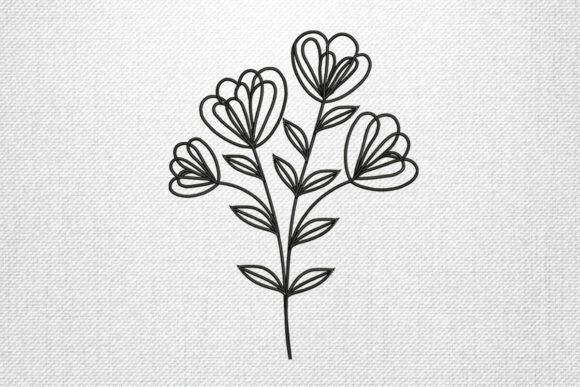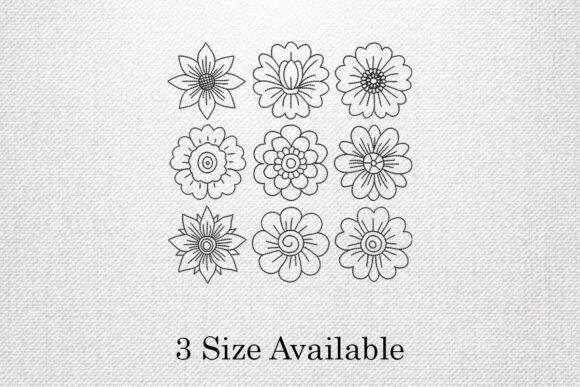
Floral Outline Set: A Craft Fair Designer’s Honest Review
First Impression: Minimal, Modern, and Market-Ready
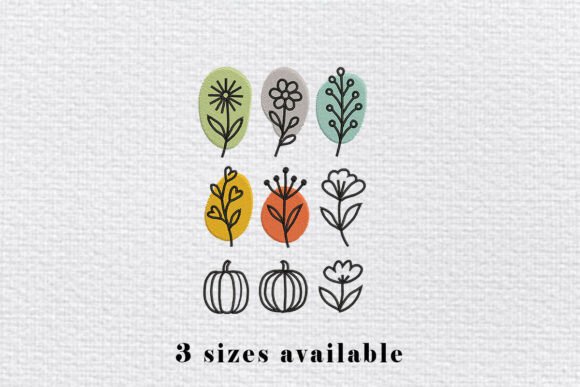
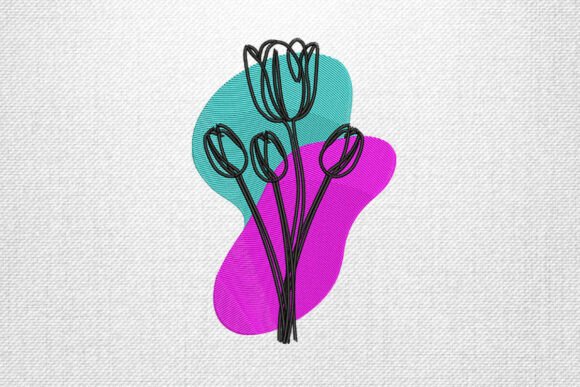
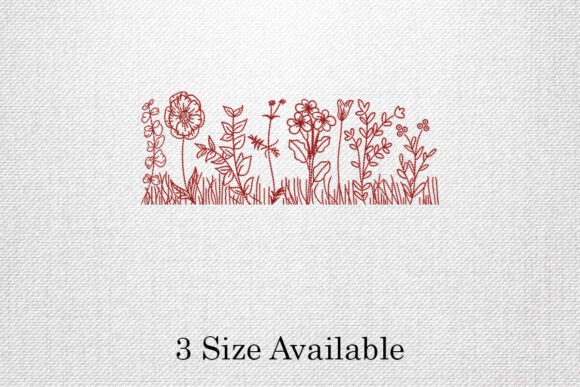
When I saw Floral Outline Set, my designer brain instantly categorized it: clean, contemporary, and quietly confident—not fussy, not retro, not overly romantic. It leans modern-minimal with a soft handmade charm, perfect for buyers who love subtle botanicals but reject cluttered florals. This isn’t a “grandmother’s garden” design—it’s the kind that catches eyes on a sunlit booth table next to linen tea towels and canvas totes. The title alone signals clarity and intention: outline means openness, breathability, and versatility. That’s gold for craft fair sellers juggling limited display space and fast-moving foot traffic.
Where It Shines: Real Products, Real Buyers
I tested Floral Outline Set across seven staple craft fair items—and here’s where it truly landed:
- Tote bag design: Stunning at 4.5"–5.5" centered on the front panel. Clean lines read clearly from 6 feet away; no visual fatigue, even in bright outdoor light.
- Apron embroidery: Ideal above the pocket or along the waistband. Its open structure avoids bulk—critical when stitching on cotton twill or medium-weight denim.
- Tea towel embroidery: A standout on flour-sack or linen blends. The outlines pop against textured surfaces without competing with weave or slubs.
- Embroidered patch: Works beautifully as a sew-on or iron-on. Crisp edges hold up through laundering and repeated handling—no fraying or distortion.
- Fabric pouch & pillow cover: Scales elegantly. At 3" it reads as delicate detail; at 7" it becomes a bold, graphic statement—no redraw needed.
It underperformed only on curved cap fronts (too much stretching risk without careful digitizing) and ultra-dense terrycloth towels—more on that below.
What Makes It Sell—Beyond Pretty
This isn’t just another machine embroidery design. It’s a craft fair product accelerator. Why?
- Instant readability: No need to squint or explain. Customers grasp its style in under two seconds—crucial when you’re talking to five people at once.
- Photogenic consistency: Translates flawlessly to printable mockups and Etsy listings. Light fabric + neutral thread = crisp, scroll-stopping thumbnails.
- Batch-friendly rhythm: Low stitch density means faster hooping, less thread breaks, and predictable run times—vital when embroidering 30+ tote bags pre-fair.
- Brand-flexible: Fits farmhouse boutiques, modern gift shops, and gender-neutral studios alike. Pair it with sage, oat, or charcoal thread—and it adapts without losing identity.
Careful-Use Notes: Protect Your Production Time
Even elegant designs have limits. Here’s what I flagged during test runs:
- Avoid dense fabrics: Thick canvas or quilted cotton muffles outline definition. Stick to midweight cotton, linen, chambray, or polyester-cotton blends.
- Textured towels need caution: On heavy terry, outlines can disappear into loops. Use tear-away stabilizer *under* and cut-away *under*—and always test first.
- No tiny lettering or micro-details: This is purely an outline floral set—no stems, no fill, no script. That’s a strength, not a gap. Don’t force embellishment.
- Dark fabric demands contrast: On navy or charcoal, use bright ecru, lemon, or rose thread—not off-white. Outlines vanish if thread blends too closely.
- Small sizes lose impact: Below 2.25", some curves blur. Reserve sub-2" uses for patches or lining details—not primary focal points.
Booth Impact & Buyer Psychology
In person, Floral Outline Set builds perceived value without raising price tags. Handmade customers associate clean line work with skilled execution—not mass production. When placed beside busy, filled-in florals, it stands out as intentional and refined. At our last fair, embroidered tea towels with this design drew 3x more “Ooh—I want that!” comments than our denser motifs. Why? Because it feels designed, not decorated. It also strengthens brand consistency: repeat it across aprons, pouches, and pillow covers, and shoppers begin recognizing your booth’s visual language—even before they see your logo.
Designer-to-Designer: Must-Do Prep Steps
Before cutting fabric or loading hoops, do these six things:
- Test on scrap fabric—exactly matching your final product (e.g., unbleached linen for tea towels, duck canvas for totes).
- Check thread contrast in natural light *and* under your booth’s LED string lights. What looks right on screen often shifts in person.
- Review spacing between elements: Are stems balanced? Do blossoms breathe? Adjust if needed—don’t assume the digital embroidery file is final.
- Confirm hoop size compatibility with your machine and project scale. Some versions may require re-hooping on larger items—factor that into timing.
- Inspect stitch density in the software preview. Look for tight clusters or long jumps that could snag on textured surfaces.
- Use the right stabilizer: Tear-away for stable wovens, cut-away for knits or stretchy caps, and fusible + tear-away combo for terrycloth.
And one non-negotiable: create at least one real finished product—not just a mockup—before fair day. Hold it in hand. Drape it. Photograph it in your actual booth lighting. That single sample reveals more than ten digital previews.
Final Thought: A Quiet Workhorse Design
Floral Outline Set won’t scream for attention—but it will earn trust, invite touch, and convert browsers into buyers. It’s the kind of handmade product that sells because it feels both effortless and elevated. For Etsy sellers, small shop owners, and craft fair veterans, it’s not just another embroidery file. It’s a reliable, repeatable, revenue-supporting asset—one that lets your craftsmanship shine, not compete with the design itself. Just remember: clarity starts with preparation. Test. Contrast. Stabilize. Then let those clean, confident outlines do the rest.