Pleasant Rose Flower Pot Redwork
First Impressions: A Quiet, Confident Classic
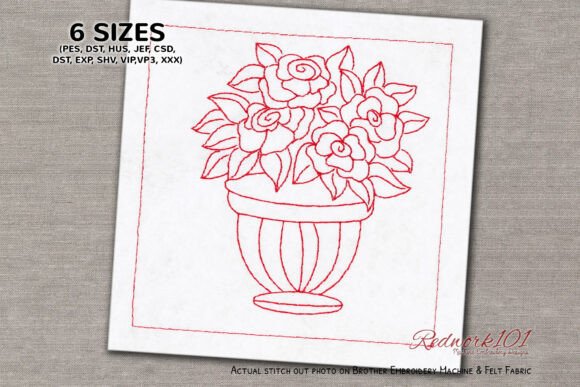
When Pleasant Rose Flower Pot Redwork appeared on my screen, I didn’t reach for the “add to cart” button—I paused. Not because it’s flashy or trendy, but because it *settles*. The composition is balanced without being stiff: a sturdy flower pot anchors the bottom third, while roses cascade upward with gentle asymmetry—some fully open, others just beginning to unfurl. There’s no clutter, no filler stems or busy leaves. Just clean lines, intentional negative space, and that unmistakable redwork charm: bold, folk-inspired, and quietly confident. It doesn’t shout. It invites closer looking—and that’s exactly what makes it work so well for real handmade products.
A Real Project Test: Embroidering This on a Linen Tea Towel
Last week, I stitched Pleasant Rose Flower Pot Redwork onto a natural linen tea towel for a small-batch boutique order. I chose the medium size (about 4.2" wide), used a lightweight cutaway stabilizer, and stuck with classic red embroidery thread on off-white fabric. What stood out wasn’t just how crisp the outlines stayed—it was how *recognizable* the design remained after washing and ironing. Customers commented on how “timeless” it felt—not dated, not trendy, just *true*. That matters when you’re building a craft business where repeat buyers expect consistency and quiet sophistication.
Where It Shines (and Why)
- Home decor & table linens: Its vertical rhythm fits perfectly on pillow covers, aprons, and kitchen towels—no awkward cropping needed. The pot grounds the design so it reads clearly even at a glance.
- Personalized gifts: Because it’s floral but not overly delicate, it works beautifully on baby blankets, toddler bibs, and nursery wall hangings—especially when paired with simple monogramming below.
- Small shop merchandise: As a machine embroidery design, it stitches cleanly across multiple fabric types. I’ve used it on cotton tote bags and unstructured canvas caps with consistent results—no puckering, no thread breaks.
- Etsy listings & digital product previews: In printable mockups, Pleasant Rose Flower Pot Redwork holds its own on both light and dark backgrounds. It translates well in grayscale, which helps buyers visualize it before purchase.
Where to Use It Thoughtfully
This isn’t a one-size-fits-all embroidery file—and that’s a strength, not a limitation. Here’s where I slow down:
- Stretchy or thin fabrics: On lightweight knits (like baby onesies), I add tear-away + topping and reduce stitch density slightly—those rose centers have enough detail that they can blur if tension isn’t dialed in.
- Curved surfaces like caps: The medium and large sizes hold up fine on structured front panels, but I avoid the largest version on curved crowns—it crowds the space. Stick to small or medium for hats.
- Dark or textured fabrics: On black denim or heavy burlap, I test contrast first. Redwork relies on clarity of line—so if your thread doesn’t pop, consider switching to burgundy or brick red instead of true scarlet.
- Tiny hoop sizes: While offered in 6 sizes, the smallest version still carries readable detail. But if you’re stitching inside a 3" hoop on a child’s cap, double-check that the pot base and stem lines don’t compress into indistinct blobs.
What It Adds to Your Finished Product
Pleasant Rose Flower Pot Redwork elevates more than just fabric—it adds intention. When customers see this on a handmade apron or embroidered sweatshirt, they register craftsmanship, care, and a sense of place. It doesn’t scream “handmade” with frills or glitter; it says it with restraint. That builds trust. For Etsy sellers and small shop owners, that subtle professionalism translates directly to perceived value—and higher willingness to pay.
It also supports brand consistency. If your shop leans into botanical, vintage, or cottage-core aesthetics, this embroidery design becomes a reliable anchor—a go-to for seasonal collections (think spring launches or Mother’s Day bundles) without feeling repetitive. And because it’s rooted in redwork tradition, it pairs effortlessly with other classic motifs: wheat sheaves, honeybees, or simple script lettering.
Practical Designer Notes Before You Stitch
- Always run a test on scrap fabric—especially if using textured weaves or blends.
- Check thread color contrast early: redwork only works if the thread stands out cleanly against your base fabric.
- Review stitch density in your embroidery software. If it feels heavy for your fabric weight, adjust fill stitch spacing—not just overall scale.
- Confirm hoop size compatibility before digitizing or resizing. Some versions may require re-hooping mid-stitch on smaller machines.
- Inspect small details like petal tips and pot rim lines—they’re delicate but intentional. If they vanish on your test, revisit stabilizer choice or needle size.
- Test in black-and-white mockups. If it loses personality there, it may not translate well across varied buyer screens.
- Verify licensing terms before selling finished items or bundling as design assets—this is essential for commercial embroidery and digital product sellers.
Final Thought: A Design That Grows With You
Pleasant Rose Flower Pot Redwork isn’t just another floral embroidery file. It’s a versatile, grounded motif that supports thoughtful making—whether you’re embroidering a single holiday gift or scaling production for a craft fair line. It belongs in the Bouquets Bunches category not because it’s crowded with blooms, but because it gathers meaning: tradition, simplicity, and quiet beauty. As an embroidery designer who’s seen thousands of files come and go, I keep coming back to this one—not for novelty, but for reliability. That’s the kind of design that earns repeat use, repeat orders, and quiet word-of-mouth praise from customers who just *know* it’s well made.