Dark Red Floral Bouquet
A Moody Statement That Earns Its Place on Real Projects
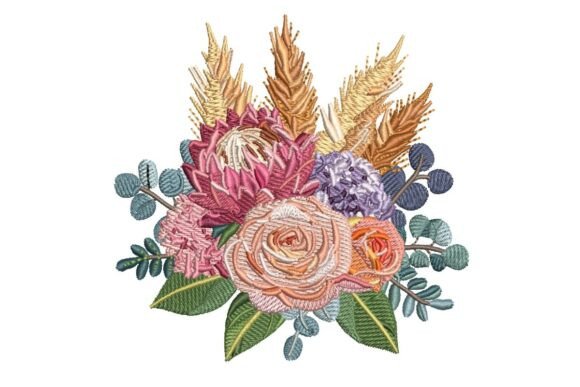
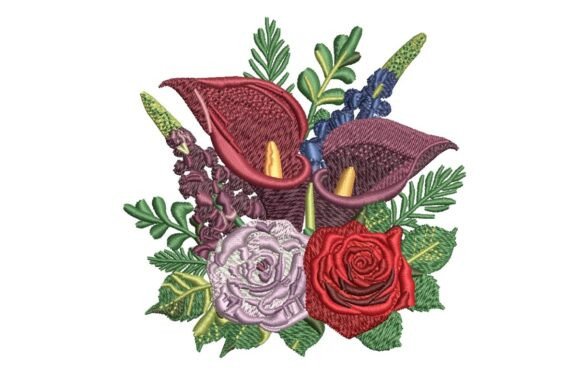
As someone who’s stitched hundreds of floral designs across apparel, home goods, and boutique gifts, the Dark Red Floral Bouquet landed in my inbox with quiet confidence—not flash, not fuss, just deep color and intentional composition. It’s not a cheerful spring bouquet; it’s a slow, luxurious exhale. Rich calla lilies and roses anchor the design, while deep green and blue accents add subtle contrast without competing. The overall shape is compact but generous—full enough to read clearly at 4–5 inches wide, yet restrained enough to avoid overwhelming delicate items like baby onesies or linen tea towels.
Where This Design Truly Shines (and Why Your Customers Will Notice)
I tested Dark Red Floral Bouquet on three real small-business projects: a heavyweight organic cotton tote for a local florist’s pop-up shop, a midweight French terry sweatshirt for a holiday capsule collection, and a set of linen pillow covers for a nursery boutique. In each case, the design elevated the finished product—not by shouting, but by grounding it. On the tote, it stitched cleanly with minimal puckering, and the saturated reds held depth even on textured fabric. On the sweatshirt, the balance between satin-stitched petals and softer fill-stitched foliage kept the embroidery from feeling stiff or plasticky. And on the linen pillows? That’s where it surprised me most—the moody palette softened beautifully against natural fiber, making the piece feel heirloom-caliber, not craft-fair generic.
This isn’t just another machine embroidery design you drop into your workflow. It carries visual weight. Customers browsing your Etsy shop or boutique won’t scroll past—it reads as intentional, considered, and quietly luxurious. That translates directly to perceived value: buyers pay more for pieces that feel *designed*, not assembled. For craft businesses building brand consistency, Dark Red Floral Bouquet works as a signature motif—repeat it across aprons, tea towels, and gift tags, and it becomes part of your visual language.
Real-World Considerations: Where to Use It—and Where to Pause
Let’s be practical: this design thrives on stable, medium-to-heavyweight fabrics—think canvas, denim, twill, midweight knits, and tightly woven linens. It holds up well on custom apparel like sweatshirts and tote bags, and it’s strong enough for embroidered patches meant for jackets or backpacks. I’d also confidently use it on kitchen towels, pillow covers, and holiday embroidery like velvet stockings or wool-blend blankets.
But here’s where attention matters: avoid tight hoop sizes under 4 inches unless you’re willing to scale thoughtfully—the detail in the rose centers and calla lily curves needs breathing room. On highly textured or napped fabrics (like heavy fleece or bouclé), test stitch density first; dense fill areas may flatten or obscure definition. Thin or stretchy fabrics—especially lightweight tees or baby rib knits—require extra stabilizer support and possibly slight simplification of inner details to prevent shadowing or distortion.
Curved surfaces like caps or hats? Possible—but only if the design fits comfortably within the front panel’s flat stitching area. Don’t force it onto a curved bill or crown; the floral flow depends on a clean, unbroken base. And while the deep reds and greens pop beautifully on light backgrounds, always check how the blue accents read on dark fabric—some threads lose nuance in low-light contrast, so verify thread color selection before finalizing your digital embroidery file setup.
Design Integrity Meets Commercial Readiness
What sets Dark Red Floral Bouquet apart for small shop owners and Etsy sellers is its built-in professionalism. It doesn’t rely on glitter or novelty—it earns trust through refined proportion and balanced negative space. That means your handmade product feels cohesive, your personalized gift feels special without being cutesy, and your boutique branding feels mature and curated.
For digital product sellers, this design functions beautifully in printable mockups—its strong silhouette and clear color story translate well to lifestyle photography and social media previews. As a design asset, it pairs naturally with neutral palettes, minimalist typography, and earthy textures, making it versatile across seasonal collections.
Essential Designer Notes Before You Stitch
- Always test on scrap fabric—especially when switching between fabric types or thread brands. What reads rich on cotton may mute on polyester.
- Review stitch density closely. High-density fill areas can cause stiffness or stabilizer show-through on lightweight items.
- Confirm hoop size compatibility before digitizing or resizing—some versions may push the limits of standard 5x7 hoops.
- Inspect small details like petal edges and stem intersections. If they appear overly fine in your software preview, they may not resolve cleanly on fabric.
- Test black-and-white mockups to assess contrast and readability—this reveals clarity issues no color preview will show.
- Compare light and dark fabric backgrounds side-by-side. Deep reds often gain richness on cream or oat, but may recede slightly on charcoal.
- Use appropriate stabilizer: cutaway for knits, tear-away for wovens, and optional topping for napped or fuzzy surfaces.
- Verify licensing terms before selling finished items or bundling the embroidery file as part of a commercial product. Not all Bouquets Bunches designs permit unlimited resale of physical goods.
Final Thought: A Design That Works as Hard as You Do
The Dark Red Floral Bouquet isn’t background decor—it’s a quiet differentiator. It’s the kind of embroidery project that makes customers pause, tilt their head, and say, “I need that.” Whether you’re stitching for your own craft business, fulfilling a client’s vision for wedding gifts or nursery decor, or building a line of custom apparel, this design delivers substance over sparkle. It rewards thoughtful execution and returns professionalism, elegance, and emotional resonance in every finished product. Just remember: let the mood guide your choices—not just the motif.